Shopping Cart
There are no more items in your cart
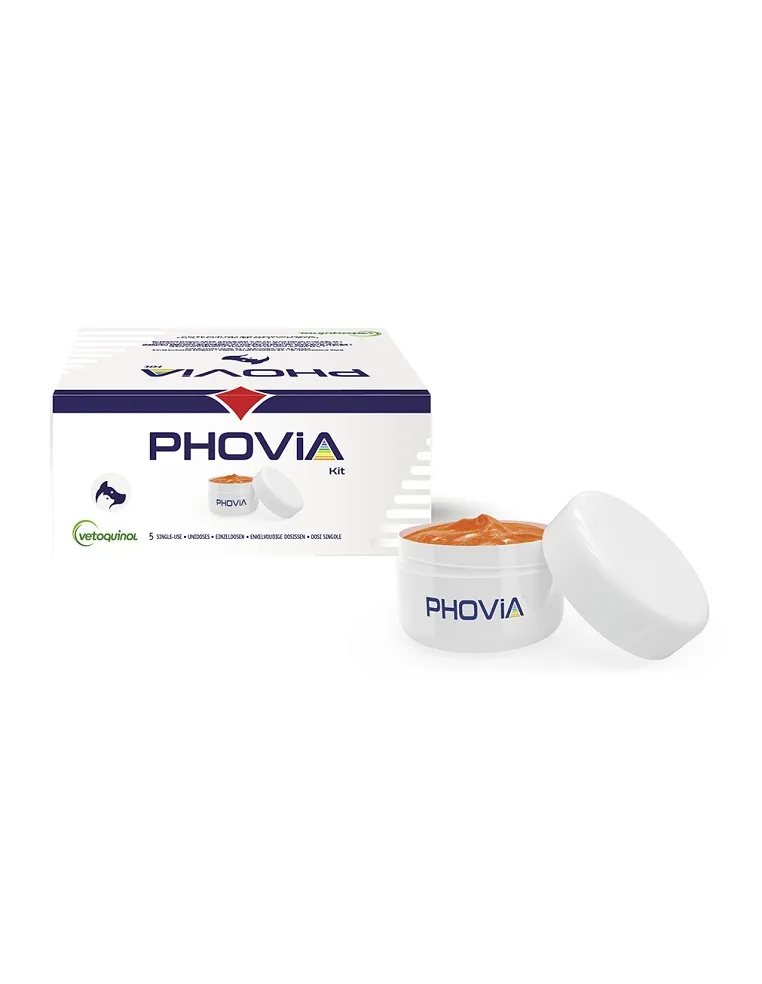
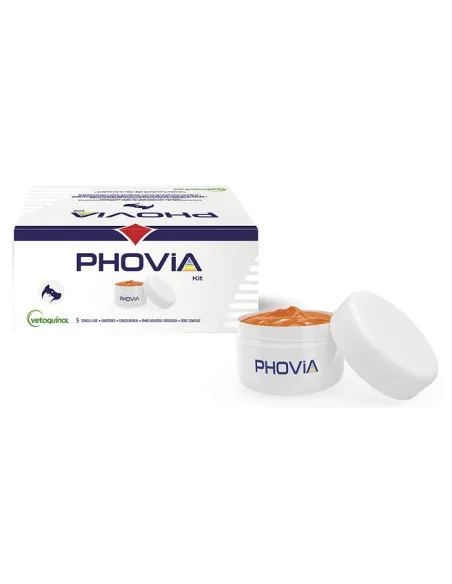


phovia gel kit 5+5 is a topical kit designed for the local treatment and support of the skin and soft tissues in the veterinary field. The marketing name indicates a package identified as a "5+5 kit", which suggests a combination of units designed for multiple applications in a single package. The formulation is presented as a gel, with adhesive characteristics and the ability to maintain a moist environment conducive to the management of superficial lesions, local relief and temporary protection of the treated area.
The product was designed to facilitate topical application, with a consistency that allows for easy application and stable adhesion to the skin surface. The kit format allows you to have more applications available, optimizing the management of local treatment and reducing the need for excessive manipulations during the daily care of the animal. The package, called 5+5, is designed to offer convenience in repeated administration without compromising the integrity of the contents.
The gel is formulated to be compatible with application on clean and not too large skin areas; it is designed to remain in contact with the lesion for the time necessary to exert a protective and soothing action. The consistency and structure of the product favor uniform distribution, limiting dispersion on unaffected surfaces and contributing to targeted and controlled use.
phovia gel kit 5+5 is proposed as a practical solution for the local management of small lesions, superficial abrasions, skin irritations and for the maintenance of a microenvironment favorable to natural tissue repair. The use of the gel should always be evaluated and guided by the responsible veterinarian, who will be able to indicate the appropriateness of the treatment and the most suitable duration based on the clinical state of the animal and the nature of the lesion.
Therapeutic Indications
General indications for use: The product is intended for topical application for the local treatment and support of the skin and superficial lesions in the veterinary field. It is indicated for the management of superficial abrasions, small abrasions, red or irritated areas, and for maintaining an environment conducive to skin healing. In particular, the gel can be used as a support in the initial and intermediate phases of the skin repair process, helping to protect the damaged surface, reducing friction and further mechanical and environmental contamination, and facilitating daily dressing operations.
Complementary indications: It can be used as part of a broader local therapeutic plan, associated with cleansing, disinfection and medication interventions, when appropriate. It is useful in cases of small superficial post-operative lesions that do not require thorough occlusive dressings or additional surgical interventions, where the veterinarian deems topical support sufficient. The product can be considered to relieve skin discomfort related to chafing, contact areas with collars or harnesses, as well as for areas subject to mild irritation due to environmental or mechanical factors.
Limitations of the indication: It is not intended to replace systemic treatments or surgical procedures in the presence of deep infections, extensive lesions, bleeding wounds, tissue necrosis or conditions requiring specific and targeted therapeutic approaches. The use must be carefully evaluated in animals with concomitant pathologies that can affect skin healing, such as metabolic disorders, immune deficiencies or chronic systemic diseases. In such cases, an integrated therapeutic plan and continuous clinical evaluation by the responsible veterinarian are essential.
Method of use according to the indication: For each application, local treatment must be limited to the affected areas, avoiding extension onto uninvolved healthy skin. It is advisable to combine the application of the gel with adequate cleansing of the area, when necessary, and with regular clinical monitoring to evaluate the response to therapy and identify any signs of worsening or local reaction. The veterinarian will decide the frequency of applications and the duration of treatment based on the severity of the injury and the speed of recovery observed.
Final notes: The use of the product is part of a local skin management strategy that favors clinical evaluation, prevention of infection and adequate treatment of lesions. Prolonged or improper use without professional supervision is not recommended; if signs of worsening or local adverse reactions appear, it is necessary to suspend the application and consult the veterinarian.
Composition
General description of the composition: phovia gel kit 5+5 is presented in the form of a topical gel. Its formulation is designed to guarantee a stable consistency, good adhesion to the skin surface and a sensation of local protection and support. The gel is composed of a matrix that may include gelling agents, hydrating and humectant vehicles, and excipients aimed at improving stability, tolerability and ease of application. The composition is optimized to minimize the risk of irritation and to facilitate practical handling during repeated applications typical of a multi-unit kit.
Functional components: The gel base is formulated to guarantee homogeneous distribution on the skin surface, with agents that maintain an adequate level of humidity in the treated site without creating excess liquid. Elements are included that give controlled viscosity, allowing both spreadability and permanence of the product on the skin. The presence of humectants and film-forming agents helps to create a temporary protective barrier that limits the mechanical and environmental exposure of the lesion, while promoting the gaseous exchange necessary for correct healing.
Excipients and safety features: The excipients are selected based on skin compatibility and reduced sensitization. The formulation avoids the use of substances known to cause high irritability or sensitization in most animals; however, individuals with individual sensitivity can also react to components that are predominantly well tolerated. The composition is designed to minimize persistent residues and to allow easy removal if necessary, facilitating subsequent dressings and wound inspections.
Kit format and indicative dosages: The reference "5+5 kit" describes the package which includes a number of units designed for multiple applications. Each unit of the kit is designed for a local and single application; the amount to be applied depends on the extent of the lesion and the clinical evaluation. Being a topical product, the composition is calibrated for local use and not for systemic administration. For detailed information on the complete list of excipients or on the presence of specific components, contact your veterinarian or consult the technical documentation supplied with the product.
Conservation and integrity of the product: The gel formulation is packaged in such a way as to preserve the physical-chemical characteristics for the entire period of use foreseen by the package. The integrity of each unit of the kit is designed to avoid cross-contamination between applications and to keep the properties of the gel unaltered until the moment of use, thus allowing hygienic and practical management of subsequent topical applications.
Contraindications
General contraindications: Do not use the product in case of known hypersensitivity or allergic reaction to any of the ingredients of the formulation. In the presence of clinical signs indicative of skin sensitization or adverse reactions to previous topical treatments, the application of the gel should be avoided until veterinary evaluation. It is also contraindicated for use on deep wounds, on lesions with significant active bleeding, in the presence of extensive necrosis or in all situations in which immediate surgery or more advanced specialist medication is necessary.
Do not use as a replacement for specific therapies: The product is not indicated to replace systemic or local treatments necessary for deep infections, severe cutaneous parasitoses, wedged forasacchi or conditions requiring antimicrobial therapies, surgical debridement or other invasive veterinary procedures. Improper use in these conditions can delay correct treatment and worsen the clinical outcome.
Precautions in animals with concomitant conditions: In severely debilitated animals, with systemic diseases that compromise the healing process (such as serious metabolic disorders or immunodeficiencies), the use of the gel must be evaluated with caution and only after a careful evaluation of the risk-benefit ratio by the veterinarian. Even in the presence of immunosuppressive therapy, a professional opinion is preferable before application, to avoid masking or delaying the recognition of underlying infections.
Use in pregnancy and lactation: Topical use in pregnant or lactating females should be considered only if strictly necessary and after veterinary evaluation. In the absence of adequate clinical data, the treatment decision should be based on a careful evaluation of the risk-benefit ratio for the animal and its offspring.
Interactions with other topical products: Simultaneous use with other incompatible topical products or with occlusive dressings that may alter the effectiveness or tolerability of the gel is not recommended. In case of concomitant use of disinfectant agents, antiseptics or topical drugs, consult your veterinarian to avoid possible therapeutic interactions or antagonisms.
Safety of the drug for the species
Safety assessment: The use of topical products for veterinary use requires a careful safety assessment specific to the species being treated. phovia gel kit 5+5 is formulated for local use and the amount absorbed systemically, if any, is expected to be very limited; however, specific safety may vary depending on the species, size, age and state of health of the animal. It is essential to consider the physiological differences between different species (for example dogs, cats and other animals) and adopt appropriate precautionary criteria, limiting use to cases in which the expected benefit justifies local application.
Risk of accidental ingestion: Being a topical product, it is important to prevent the animal from licking, smelling or ingesting the gel in the hours following application, since accidental ingestion could cause gastrointestinal or systemic reactions depending on the composition. The use of physical measures (Elizabethan collar, temporary protective dressings) may be necessary to avoid ingestion and ensure that the product remains on the treated site for the necessary time.
Considerations for sensitive populations: Puppies, elderly animals, debilitated subjects or those with alterations to the skin barrier present greater variability in the response to topical products. In these subjects, more careful monitoring after application is recommended, with control of the treated site and observation of any general signs of intolerance or local worsening. In the absence of specific data for these categories, the decision on use should be made by the veterinarian on the basis of a case-by-case evaluation.
Reporting of adverse reactions: If signs of a local adverse reaction appear (persistent redness, edema, intense itching, appearance of vesicles or ulcers) or suspicious systemic signs after application (vomiting, diarrhoea, apathy), it is necessary to immediately discontinue use and consult the veterinarian. Any reactions must be documented and reported to the competent authorities or to the treating professional to evaluate the need for further investigations and to update the recommendations for use.
Precautions
Precautions for use in animals: Before application it is important to evaluate the state of the lesion and proceed, if necessary, with adequate cleansing. Do not apply the gel to dirty, severely contaminated or necrotic wounds without prior cleaning and, if indicated, debridement. In the absence of complete clinical information, avoid prolonged use without veterinary re-evaluation. Limit the extent of application to the affected area only to reduce the risk of irritation or unnecessary exposure of healthy skin.
Precautions for those administering the product: Operators must avoid prolonged contact with the skin and mucous membranes; Hand washing is recommended after handling. In case of accidental contact with eyes or mucous membranes, rinse thoroughly with water and, if irritation persists, consult a healthcare professional. Keep the product out of reach of children and animals not intended for treatment. Remove only the unit necessary for immediate application from the blister or packaging to avoid contamination of the remaining units of the kit.
Management of any reactions: If signs of irritation, worsening of the lesion or appearance of systemic adverse reactions are observed after application, discontinue use and promptly evaluate the patient. In the event of significant accidental ingestion by the animal or operator, contact your veterinarian or poison control center for specific guidance and monitoring.
Interaction with other treatments: Use caution when the gel is used in combination with other topical products or occlusive dressings. Some local treatments may alter the absorption or effectiveness of the gel; therefore, any concomitant therapy must be evaluated and approved by your veterinarian to avoid side effects or reductions in efficacy.
Method of administration
Preparation of the application site: Before application, gently remove dirt, excess hair or debris from the affected area using non-traumatic methods, cleansing if necessary with suitable products and carefully drying the skin around the lesion. The area must be as clean and dry as possible to promote adhesion of the gel and limit the risk of contamination. If scraping or thorough cleaning is necessary, carry out these maneuvers according to veterinary indications before proceeding with the application.
Application method: Open the kit unit intended for immediate application following the handling instructions and removing any protective seals. Apply a quantity of gel sufficient to cover the lesion with a thin and uniform layer, avoiding excesses that could drip or be easily removed by the animal. Distribute the product with delicate movements, avoiding intense rubbing which could aggravate the lesion. After application, keep the animal under control to avoid licking or removing the product for the time necessary for its local action.
Frequency and duration of applications: The frequency of administration depends on the nature and extent of the lesion and on the clinical evaluation of the veterinarian; generally the application is repeated at the intervals indicated by the professional, until complete resolution or until medical re-evaluation. Do not extend use beyond the recommended period without consulting your veterinarian. If after an adequate period of treatment no improvement is observed or worsening is noted, discontinue the application and request a specialist re-evaluation.
Indications in case of secondary dressings: If the treated site requires bandage or secondary dressing, follow the veterinary instructions for the use of gauze or dressings that do not compromise the protective function of the gel. Avoid tightly closed occlusive dressings unless indicated, as they may change the local environment and affect the healing process. Regularly monitor the treated area and replace the dressing according to the recommended times.
Treatment program
General guidelines on the therapeutic program: The treatment plan with phovia gel kit 5+5 must be personalized based on the severity and nature of the lesion, the species and the general state of the animal. Generally, topical treatment involves repeated applications at regular intervals established by the veterinarian, carefully monitoring the clinical response. The overall duration can vary from a few days to several weeks, depending on the progressive evolution of the healing and the need for complementary interventions. Periodic clinical re-evaluation is essential to adapt the program and decide to suspend or continue treatment.
Treatment phases: In the initial phase, apply the gel after carefully cleansing and drying the area, at a frequency established by the veterinarian (for example one or more times a day, depending on clinical needs and the prescription). During the consolidation phase of healing, the frequency can be progressively reduced until complete suspension when the skin appears intact and the lesion resolved. If signs of infection, infiltration or worsening appear, the protocol should be reevaluated and additional interventions such as antimicrobial therapy or surgical procedures should be considered.
Special programs for chronic or recurrent conditions: In slow-healing lesions or in areas prone to relapse, prolonged treatment with regular clinical checks can be planned. In these cases, it is important to address any predisposing factors (mechanical friction, chronic humidity, systemic pathologies) and combine preventive strategies to reduce the risk of relapses, always under the supervision of the veterinarian.
Monitoring and discontinuation criteria: Monitor clinical evolution carefully; stop applying the gel and request veterinary advice if worsening of the lesion, appearance of marked inflammatory signs, purulent secretions, unpleasant odor or hypersensitivity reactions are observed. The decision to continue, modify or suspend treatment must be taken by the responsible veterinarian based on clinical observation and, if necessary, in-depth examinations.
Target species
Intended recipients: The product is intended for veterinary use and can be used on pets where local topical support for small skin lesions is indicated. The choice of the specific species, the assessment of suitability and the possible adaptation of the method of use must be carried out by the attending veterinarian. It is essential to consider species-specific differences in skin structure, licking propensity and skin sensitivity, and adapt treatment accordingly.
Considerations for different species: In dogs and cats, which represent the most commonly treated species in the home, the application must take into account behavioral habits (e.g. intense licking in cats) and the need for additional protective measures to avoid ingestion of the product. If the gel is used in other species of the same veterinary category, always evaluate the risk-benefit ratio and the containment method to prevent early elimination of the product through self-mutilation or licking.
Specific precautions for sensitive populations: In puppies, elderly animals or subjects with particularly sensitive skin, proceed with caution and more frequent monitoring. The choice not to use the product in some situations (for example on very large wounds or on animals in compromised clinical conditions) must always be based on a professional evaluation. For all species, consultation with the veterinarian is prescriptive to adapt the treatment to the individual needs of the animal.
Final note: The use of the product on unforeseen species or in particular conditions requires specialist advice; safety and effectiveness may vary and therefore any use outside of the general indications must be carefully assessed and documented by the responsible veterinary professional.