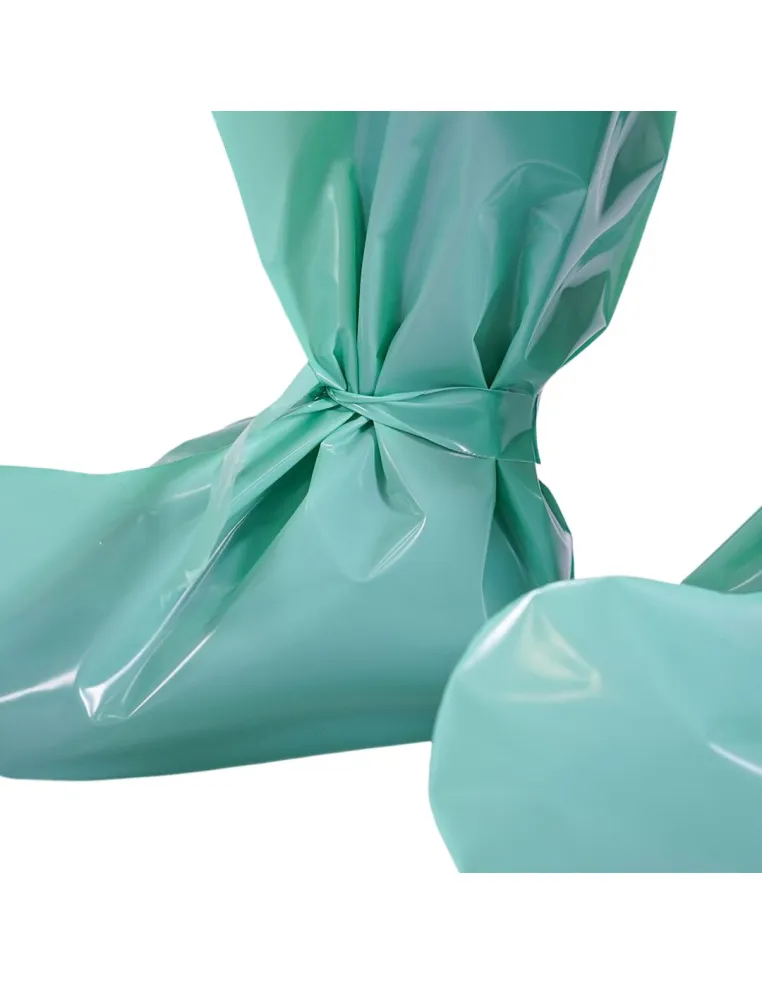
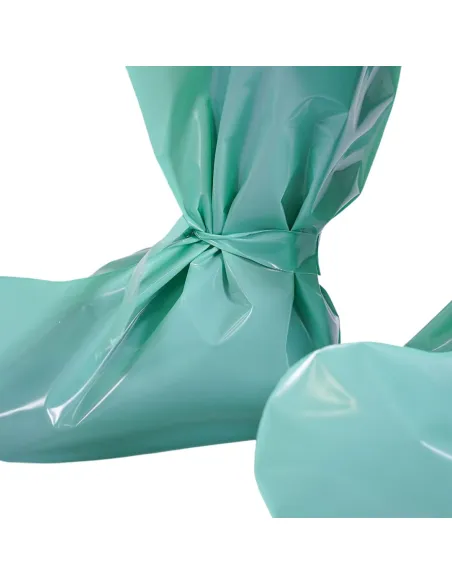
Heavy Zootechnical Shoes are disposable devices designed to offer superior protection in livestock and agricultural environments and in all those contexts in which it is essential to preserve the hygiene and safety of operators and animals. The construction material was specifically selected to guarantee high resistance to mechanical stress, abrasion, chemical agents and liquids, managing to maintain its integrity even during the most demanding activities. The package contains 50 pairs of shoes, ideal for the needs of farms, livestock farms, stables, feed mills and veterinary laboratories that require a reliable supply in adequate quantities for staff and visitors.
These heavy shoes are designed to be easily worn over existing footwear, thus facilitating quick donning and doffing without contaminating the environment. The external surface is designed to offer a non-slip grip, reducing the risk of falls even when floors are wet, dirty or covered in organic residues. The waterproof properties ensure that the operator's feet always remain dry, as well as preventing dirt, mud or potentially pathogenic substances from coming into contact with the underlying footwear.
Heavy Zootechnical Shoes represent the ideal choice for operators who work in difficult conditions and need robust and effective personal protective equipment. The attention to design also guarantees good breathability, promoting comfort during prolonged use and reducing the risk of irritation or dermatitis due to sweating. Each pair is packaged to facilitate distribution and use, proving to be a practical and hygienic solution both for ordinary activities and for emergency situations and health checks.
Therapeutic Indications
The use of Heavy Zootechnical Footwear is indicated in all those situations in which it is essential to maintain high levels of biosafety and hygiene, minimizing the spread of contaminating agents and infectious diseases transmitted through footwear. They are essential during cleaning and disinfection operations in livestock environments, as well as during veterinary visits and health inspections in breeding sheds. They also find wide application in the dairy sector to preserve the quality of the finished product and in the poultry sector to prevent the transmission of diseases between the various production sectors.
In situations where compliance with biosafety protocols is required, such as during outbreaks of transmissible diseases (avian flu, salmonellosis, brucellosis), heavy zootechnical footwear represents an effective barrier against the mechanical transmission of pathogens, both from outside to inside the company and vice versa. They are recommended for both internal staff and external visitors (technicians, veterinarians, inspectors), guaranteeing a uniform standard of protection regardless of the type of footwear worn underneath.
These shoes are also particularly useful for ward isolation procedures and quarantine activities, where it is necessary to limit any potential vehicle of cross-infection as much as possible. Their use is also recommended in the case of handling sick animals, waste management, treatments with chemical products or in all activities that expose feet and footwear to the risk of biological or chemical contamination.
Composition
The Heavy Zootechnical Shoes are made of high-density plastic material, specially chosen to offer an optimal combination of resistance, elasticity and comfort. The structure is made up of a layer of polyethylene or similar synthetic polymers, with a greater thickness than common disposable shoes, to guarantee greater durability and protection. The high thickness allows the characteristics to be maintained even in the presence of abrasive surfaces, aggressive liquids or in variable climatic conditions.
The absence of latex makes these shoes also suitable for people subject to allergies or specific skin sensitivities, reducing the risk of allergic reactions. The materials used are chosen to be non-toxic, odorless and free of harmful substances, to guarantee the health of users and animals they may come into contact with. Furthermore, they are designed to resist reactions with detergents, disinfectants and other substances commonly used in livestock environments, without undergoing alterations in structure or functionality.
Waterproofing is a fundamental characteristic of these shoes, obtained thanks to materials without microporosity and heat-sealed seams, which prevent any infiltration. Each pair is designed to universally fit all adult shoe sizes, making them practical in daily management. The pack of 50 pairs allows frequent rotation, ensuring always new and functional devices within reach for all staff.
Contraindications
There are no known specific contraindications to the use of Heavy Zootechnical Footwear as personal protective equipment for external and temporary use. However, it is advisable not to use them in case of obvious damage to the product that could compromise its protective properties. Use in very chemically aggressive environments or in the presence of substances for which compatibility with the plastic material used is not guaranteed could reduce effectiveness or cause damage to the shoes themselves, with a possible risk of contamination for the operator.
We do not recommend reusing disposable socks, as after use the external surfaces may have become contaminated and therefore lose their ability to act as an effective protective barrier. Do not use in case of injuries or skin lesions on the feet which could be further damaged by prolonged contact with plastic materials. In case of specific allergy towards the type of polymer used (even if rare), avoid use and resort to products made with alternative materials. Always store the shoes in a dry and clean place until use, to avoid deterioration that could make the product ineffective.
If, during use, you experience skin reactions such as redness, itching or discomfort, stop use immediately and contact a doctor. They do not provide protection from serious mechanical risks, deep cuts, perforations by sharp objects or heavy crushing: in such cases, use additional specific protection devices. Disposal must be carried out in accordance with current regulations, as they could be contaminated by potentially dangerous agents.
Product safety for the species
The Heavy Zootechnical Shoes are designed to guarantee a high level of safety not only for operators but also for the animal species present on farms. The material used does not release toxic or irritating components, and is designed to avoid any risk of cross-contamination between the environment, operators and animals. They represent a safe solution during all animal handling, care, cleaning and feeding activities, especially when there is a need to maintain high levels of hygiene in compliance with animal health regulations.
Their constant use significantly reduces the probability of introducing pathogens or parasites into sensitive environments, proactively contributing to the protection of animal welfare. The shoes do not have sharp parts or wrinkled surfaces that could cause accidental damage to the animals themselves. Furthermore, the absence of strong odors makes the product well tolerated even by animals particularly sensitive to environmental variations.
The effectiveness of the protective barrier can be assessed above all in contexts of strengthened biosecurity, where numerous studies demonstrate the close correlation between the correct use of disposable devices and the reduction of health risks for animal populations. The use of footwear should be integrated into the daily management protocols of livestock facilities to maximize prevention and safeguard the health of livestock.
Precautions
For correct use of Heavy Zootechnical Shoes, precise precautions must be followed during donning and undressing in order to avoid contamination of hands, footwear and clothes. Before wearing them, make sure your foot and shoe are dry and clean. In the case of use in particularly contaminated environments, we recommend wearing them directly at the entrance to the specific environment, avoiding crossing clean or common areas with the devices already worn.
Make sure that the socks adhere correctly to the shoe, to prevent them from accidentally coming off during use, especially on uneven or slippery surfaces. After use, remove them, taking care not to touch the potentially contaminated external surfaces with your hands: if necessary, wear suitable gloves.
Dispose of each pair in the appropriate container, according to local regulations regarding potentially infectious or hazardous waste. At the end of the operations, wash your hands thoroughly. It is advisable to always keep footwear available in all critical access areas of the plants, thus ensuring prompt protection for any external access or extraordinary situation. Store the product away from heat sources, direct sunlight, sources of humidity and aggressive chemical agents. In the event of accidental breakage during use, replace the device immediately to maintain the effectiveness of the protective barrier.
It is recommended not to use shoes already used by other operators and to suspend use in case of any sign of deterioration or loss of integrity of the material. Compliance with these simple precautions ensures maximum effectiveness and safety for both the operators and the animals present in the facility.
Method of administration
To use the Heavy Zootechnical Shoes, simply remove a pair from the package, making sure they are intact and clean. Insert each foot into the corresponding opening of the sock, sliding it until it covers the shoe entirely, ensuring that the upper edge adheres as much as possible to the ankle or calf according to the length of the sock. For complete protection, check that there are no tears and that the underlying material is not exposed. During dressing, it is advisable to wear shoes directly on the area to be protected, just before entering the area at risk of contamination.
At the end of the activities, proceed with undressing by reversing the shoe (external on internal), being careful not to touch the external part with your bare hands. If use in separate environments or in the presence of different risk areas is necessary, replace the shoes between one access and another to avoid cross-contamination. Shoes should only be used as disposable devices and should not be washed or reused. Once removed, place them immediately in the appropriate containers or bags for special waste. In the presence of particularly restrictive internal rules, strictly comply with the provisions established by the company biosafety manager.
During prolonged use, monitor the condition of the shoe and, in the event of breakage or loss of adhesion, proceed with immediate replacement to ensure continuity of protection. In case of heavy rain or significant presence of liquids on the ground, consider using an additional barrier or additional footwear.
Treatment program
Heavy Zootechnical Shoes must be used whenever access to areas at high risk of biological or chemical contamination is required by internal protocol or current legislation. The adoption of a daily use routine is recommended for all personnel who work permanently or occasionally in production areas, isolation departments, analysis laboratories, delivery rooms, shelters for sick animals, food preparation plants and during the transport of potentially infected material.
It is recommended to carefully plan the distribution and rotation of footwear, ensuring stocks are always available in the strategic entry and exit areas of the factories, as well as near health services, changing rooms and control points. It is advisable to complete the treatment program by adopting other protective measures, such as the use of gowns, gloves, masks and disinfectants, for a truly global prevention strategy.
The replacement program must take into account the intensity of use, the expected duration of the activities and the degree of risk associated with the different departments. In the event of outbreaks or health emergencies, intensify use and frequency of replacement, ensuring that no one accesses sensitive areas without wearing the footwear correctly. Periodically training staff on methods of use and good prevention practices guarantees the maximum effectiveness of the protective barrier and the protection of the health of animals and operators.
Target species
The Heavy Zootechnical Shoes are intended for operators in the livestock, agricultural and veterinary sectors who work in close contact with animals of any species, including cattle, pigs, sheep, goats, poultry and livestock in general. They are also suitable for those who work in healthcare environments dedicated to the assistance, treatment, breeding and management of domestic and companion animals.
Use is particularly recommended on farms, intensive and extensive livestock farms, stables, stables, kennels, shelters for abandoned animals, veterinary clinics, research laboratories and any place where high biosafety standards are necessary. They also offer adequate protection during plant maintenance activities, extraordinary cleaning, setting up of fairs and livestock events.
Although specifically developed for the livestock sector, the footwear can also be successfully used in non-animal contexts, such as in the food industry, in the management of composting plants or any environment where temporary staff and disposable protective tools are required to maintain high standards of cleanliness and hygiene.