Shopping Cart
There are no more items in your cart
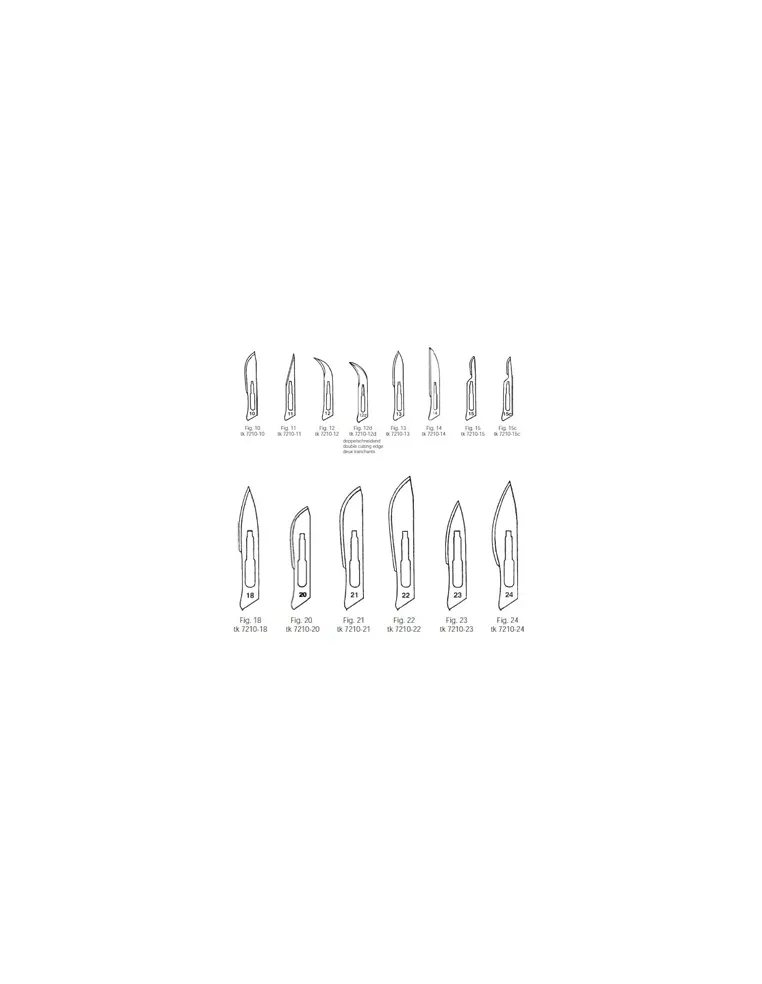
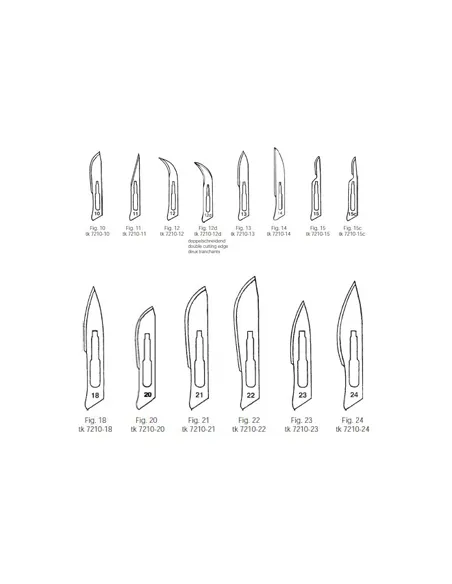


The TKM 11 Scalpel Blades represent a precision and reliable solution for all cutting needs in the medical and surgical fields. Made of high quality steel, these blades are particularly sharp and robust, thus guaranteeing a clean and safe cut, reducing to a minimum the pressure needed on the tissue during operating manoeuvres. The tapered tip profile, typical of the model 11, favors pinpoint incisions or curved sections with total control, ensuring precision even in the most complex details. Ideal for professionals who want efficient and precise tools, they are designed to maintain high stability during use, limiting vibrations. Each package includes 10 individually sealed pieces, so as to perfectly preserve sterility until opening, meeting the hygiene standards required in the operating room and outpatient clinics. Compatible with numerous universal scalpel handles, these blades are suitable for both specialist surgical interventions and small outpatient treatments. Each blade is processed with advanced sharpening technologies that ensure the preservation of the blade even after repeated cuts, reducing the need for frequent replacements during the procedure.
Therapeutic Indications
The TKM 11 Scalpel Blades are used in the medical-surgical field to make precise and controlled incisions, which are fundamental in various clinical contexts. The design of the blade, which ends with a slightly curved sharp tip, allows you to make initial cuts in specific points of the skin or other soft tissues, necessary to obtain targeted access during small operations, skin biopsies, drainage of subcutaneous collections, or in microsurgery. They are also used in the dental field for gingival incisions, in dermatology for small and medium-sized lesions, and in plastic surgery in the treatment of scars or in the preparation of flaps. They are perfect for making curved or arched incisions thanks to the peculiar shape of the tip, making them indispensable in the practice of expert professionals who carry out high precision interventions. The reliability of the blade promotes rapid healing as the clean incision limits damage to the surrounding tissues, also minimizing the risk of post-operative infections. The TKM 11 Scalpel Blades are, therefore, recommended in cases where it is essential to avoid inaccuracies and unnecessary trauma to the tissues.
Composition
The TKM 11 Scalpel Blades are made entirely of high quality stainless steel, subjected to advanced heat treatment processes to guarantee optimal hardness of the blade and maintain its sharpness over time. The surgical steel composition gives antioxidant properties, essential in a hospital environment where humidity or body fluids could quickly alter less valuable materials. Each blade is manufactured with an extremely thin profile to ensure a precise, tear-free cut. The tip of the blade, characteristic of the 11 model, is worked with sharpening methods that allow it to maintain its edge even after intensive use. The steels used are selected to be compatible with sterilization standards and do not release toxic particles or components during use. The blades are individually packaged in sealed sachets in order to preserve sterility; the multipack of 10 pieces guarantees a supply suitable for covering numerous interventional procedures, guaranteeing reserve and ease of use for healthcare personnel.
Contraindications
The use of TKM 11 Scalpel Blades is contraindicated in all those clinical contexts in which the use of sharp instruments may entail additional risks compared to the expected benefits. They must not be used in patients with proven hypersensitivity or known allergic reactions to metallic materials, in particular stainless steel, present in the composition of the blade. Use is not indicated in operations on extremely vascularized anatomical structures without the adequate presence of expert personnel, as bleeding or complications could occur if the blade is used inappropriately. The blades, being disposable and sterile, must not be reused: this could compromise the precision of the cut and expose you to risks of cross-contamination. Recycling blades in non-medical environments or using them for purposes other than those for which they were originally designed is also contraindicated.
Safety of the drug for the species
The TKM 11 Scalpel Blades are designed exclusively for use on animal or human tissue by qualified healthcare professionals. The use of the blade by inadequately trained personnel entails a real risk of involuntary lacerations or self-inflicted wounds to the patient and can also put the operator himself in danger. The stainless steel of which the blades are made has been tested to be non-toxic and well tolerated by living tissues, avoiding inflammatory reactions or intraoperative oxidation processes. However, it is necessary to avoid prolonged contact of metallic materials with particularly sensitive tissues in order to avoid any unwanted microabrasions or microtraumas. Blades must be disposed of in sharps containers once used, to limit the risk of accidental injury or exposure to contaminating biological fluids.
Precautions
Before using the TKM 11 Scalpel Blades, always check the integrity of the packaging and the absence of signs of compromised sterility. It is recommended to use personal protective equipment such as disposable gloves and, if necessary, protective glasses to protect against any accidental splashes or projections. The blade must be inserted carefully onto the compatible scalpel handle, avoiding excessive pressure which could deform the cutting edge. Do not use leverage to avoid any breakage or bending that could compromise the structure of the blade. After use, insert the blade into a special container for sharps without ever attempting to remove it manually. It is not recommended to handle loose blades outside their packaging until the moment of actual use to avoid accidents at home or at work. In case of accidental contact with the skin, immediately wash the affected area with plenty of water and disinfect. If accidental injuries occur, follow the company protocol for exposure to sharp instruments, undergoing the required medical checks.
Method of administration
The TKM 11 Scalpel Blades must be held with an appropriate scalpel handle and firmly fixed in the dedicated housing, scrupulously following the assembly procedures recommended by good surgical practices. Before starting the procedure, it is essential to confirm that the blade is well anchored to avoid unexpected movements that could affect the precision of the cut. During the operation, the blade must be guided with constant control and without excessive pressure, leaving the sharpening to do most of the incision work. Once the cut has been made, the blade must be removed from the handle using a suitable tool or using safety systems integrated into the handle itself, reducing the direct exposure of healthcare personnel to the sharp edge. Never reuse the blade after the first application and ensure correct disposal.
Treatment program
Not being a drug but a surgical medical device, the TKM 11 Scalpel Blades are used in all cases where precise incisions are required at the level of the skin or other soft tissues. The frequency of use depends on the volume of surgical activity expected in the clinic or operating room. Each blade is disposable; it is recommended to use a new blade for each patient and for each skin access to ensure maximum safety and precision during healthcare provision. In the case of complex or prolonged interventions, replace the blade if even minimal drops in sharpness or anomalies in cutting resistance are perceived. It is good practice to always have an adequate supply, planning the replacement of the blades in relation to the different surgical steps or different procedures scheduled throughout the working day.
Target species
The TKM 11 Scalpel Blades are intended for medical and surgical use on human patients in healthcare facilities, outpatient clinics, first aid centers and specialist practices. They can also be used in the veterinary field for animal surgery, where maximum precision in incisions and tissue manipulation is required. It is recommended for exclusive use by healthcare professionals, veterinarians and personnel duly trained in the execution of surgical or similar procedures.