Shopping Cart
There are no more items in your cart
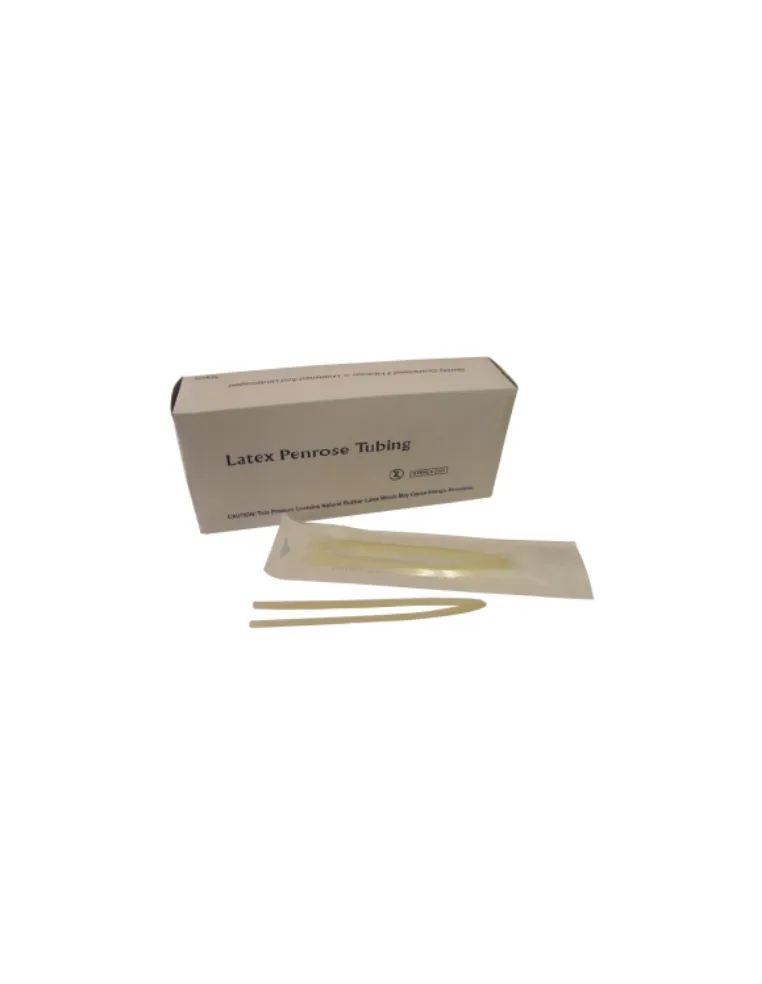


The 40 cm long Penrose latex drain, supplied in a 10 meter pack, represents an extremely versatile and reliable solution in the treatment of situations requiring passive drainage of body fluids in surgical and medical settings. Made entirely of soft and flexible latex, it is mainly used to facilitate the evacuation of serum, pus, blood and post-operative fluids from wounds or anatomical cavities, thus reducing the risk of infections and promoting healing processes. Thanks to its cylindrical structure and modular length, it is easily sectionable and adaptable to different clinical needs, allowing the treatment to be personalized according to the type of intervention and the size of the wound. The latex gives the drainage considerable resistance and elasticity, preserving the draining function for the entire period of use. This type of drainage is preferred in many surgical contexts thanks to its ability to maintain a constant evacuation of liquids without creating negative pressure, thus reducing the risk of damage to surrounding tissues and minimizing discomfort for the patient.
Therapeutic Indications
The Penrose latex drainage is used in a wide range of surgical procedures, being an indispensable aid for the management of surgical wounds, whether post-operative or due to trauma. It is especially indicated when it is necessary to prevent the accumulation of exudates which, if not properly evacuated, could cause infections, delay healing and lead to major complications. The device finds application in general surgery, orthopedics, gynecology, plastic surgery, veterinary surgery and in all situations where it is necessary to keep a cavity free from secretions. Its passive action promotes the natural drainage of fluids following the principle of gravity, offering simple and effective management of secretions. It is also often used as a temporary aid in cases of surgically drained abscesses, to prevent the collection from reforming, thus keeping the operating bed clean and facilitating monitoring of the patient's condition through the quantity and quality of the drained fluid. Its function is also fundamental in deep wounds which, without adequate drainage, could close prematurely, trapping liquids and increasing the risk of septic complications.
Composition
Material: The Penrose drain is made entirely of high quality latex, a material known for its elasticity, soft touch, and resistance. The absence of toxic or irritating substances guarantees the safety of the tissues in contact with the device, limiting the risk of adverse or allergic reactions. The latex used is designed to be robust but flexible, so as to adapt easily to body cavities without causing mechanical damage to the tissues. The surface is smooth to minimize the adhesion of clots or tissues, facilitating atraumatic removal at the end of the period of use. The high biocompatibility of the latex allows safe use even in the event of the need for prolonged drainage, while the sterility of the product, guaranteed until the package is opened, drastically reduces the risk of cross-infections. The drainage is supplied in 10 meter rolls, thus allowing the customization of the length depending on the different operating needs and the great variety of clinical situations in which it can be used.
Contraindications
The use of the Penrose latex drainage is contraindicated in patients with known hypersensitivity or allergy to latex, as prolonged contact can induce skin reactions, itching, urticaria, swelling or, in more serious cases, anaphylactic reactions. It is also not recommended in wounds where extensive necrosis is present, as the device could further promote the adhesion of damaged tissue and slow down the cellular repair process. It should not be used in settings where complete sterile sealing is required or where an active drainage device with a suction system is required, as Penrose drainage is limited to passive drainage. Pay attention even in the case of very small superficial wounds, where the risk of drainage leakage or ineffective drainage is higher. In all cases, the doctor's evaluation remains fundamental to avoid complications associated with improper use of the device.
Device Safety for the Species
The Penrose latex drain is designed for safe use on human patients and animals, as long as the specific needs of the species and the anatomical site in which it is positioned are taken into account. The softness of the latex significantly reduces the risk of mechanical injury to the tissues during the positioning and permanence of the drain. The high elasticity allows the device to be adapted to the shape of the wound or anatomical cavity, ensuring effective functioning for the entire duration of the treatment. During use, it is important to periodically check the position of the drain, as well as the state of the surrounding tissues, to ensure there are no adverse reactions, inflammation or signs of infection. The product, being disposable, must be eliminated after a single use to prevent cross-contamination or hospital infections. In the case of particularly sensitive species or pediatric patients, the doctor or veterinarian must carefully evaluate the clinical conditions and decide on the most appropriate measure and duration of treatment.
Precautions
Before using the Penrose latex drainage, it is essential to check the integrity of the packaging and the sterility of the device. After opening, the drainage must be handled with sterile gloves to avoid any risk of contamination. In case of prolonged use, it is recommended to constantly monitor the condition of the wound and the insertion site, promptly discarding the device if signs of infection, inflammation or skin intolerance are observed. It is suggested to avoid placement in areas subject to intense movement or traction, to prevent displacement or premature leakage of the drain. In patients sensitized to latex, alternatives made of hypoallergenic materials should be used. During the entire period of use, healthcare personnel must ensure correct hygiene and regularly check the quantity and quality of the drained liquid, as well as the general condition of the patient. After removal, the area must be adequately disinfected and protected according to medical indications. Disposal of the device must be carried out in accordance with current regulations on potentially infectious medical waste.
Method of Administration
The Penrose drain must be surgically inserted inside the cavity or wound to be drained, after having assessed the need and depth of the anatomical site. The desired length can easily be achieved by cutting the required length from the 10 meter roll provided. After sterile preparation of the area, the drain is introduced and securely secured, usually with stitches that prevent accidental displacement. The external part is left protruding from the wound, so as to allow the exit of liquids and facilitate easy removal at the end of the therapy. During the period of stay, it is necessary to carry out regular medications and monitor the functionality of the device, removing and replacing the drain as soon as the amount of exudate is reduced or in the presence of complications. The length of stay varies depending on the severity and course of the wound, and must always be determined by the doctor in charge.
Treatment Program
The Penrose drainage treatment program depends on the type of surgery and the amount of exudate produced by the wound. In general, drainage is maintained until there is minimal or no fluid secreted from the wound, often for a period of several days to a week. In cases of deep wounds or significant purulent collections, it may be necessary to extend the stay, always constantly monitoring both the functionality of the device and the evolution of the patient's clinical status. During treatment, it is suggested to perform daily dressings and to note the volume, color and consistency of the drained material, important parameters for follow-up and speed of healing. Removal of the drain must be carried out gradually, following the protocol established by the surgeon, to avoid painful experiences or sudden leakage of residual fluid. After removal, the area should continue to be monitored for any signs of residual fluid collection or infection.
Target Species
This medical device, given its safety and versatility characteristics, can be used both on humans and in the veterinary field for the treatment of dogs, cats and other companion or farm animals, subject to evaluation by the veterinarian in relation to the specific anatomical and clinical needs of the species being treated.