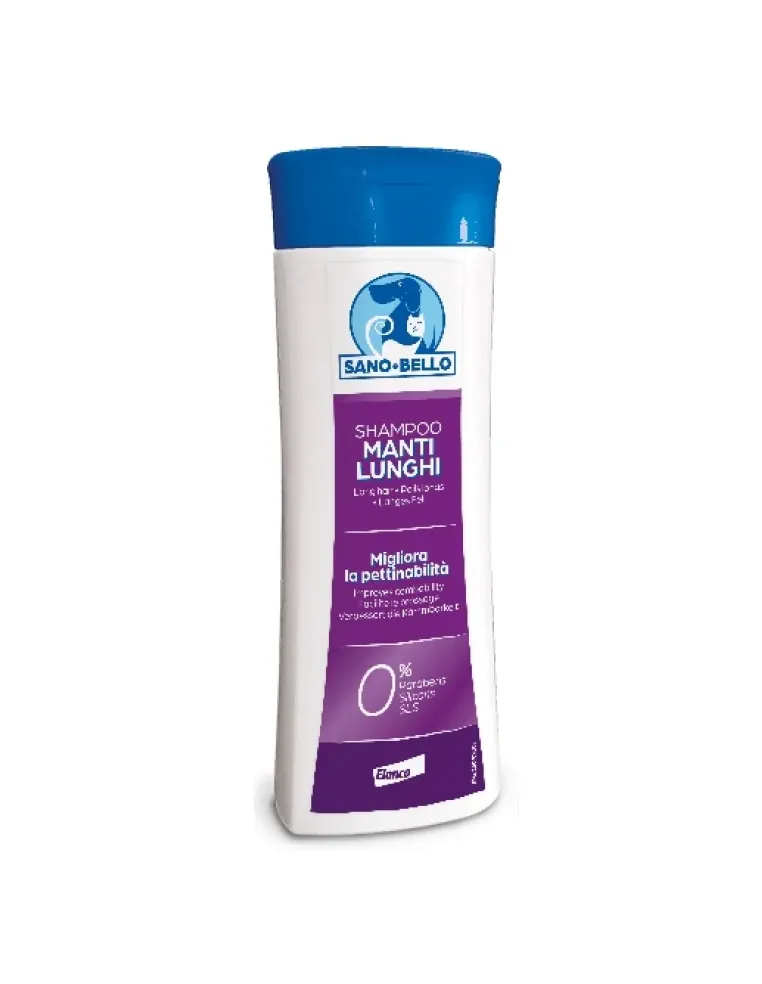
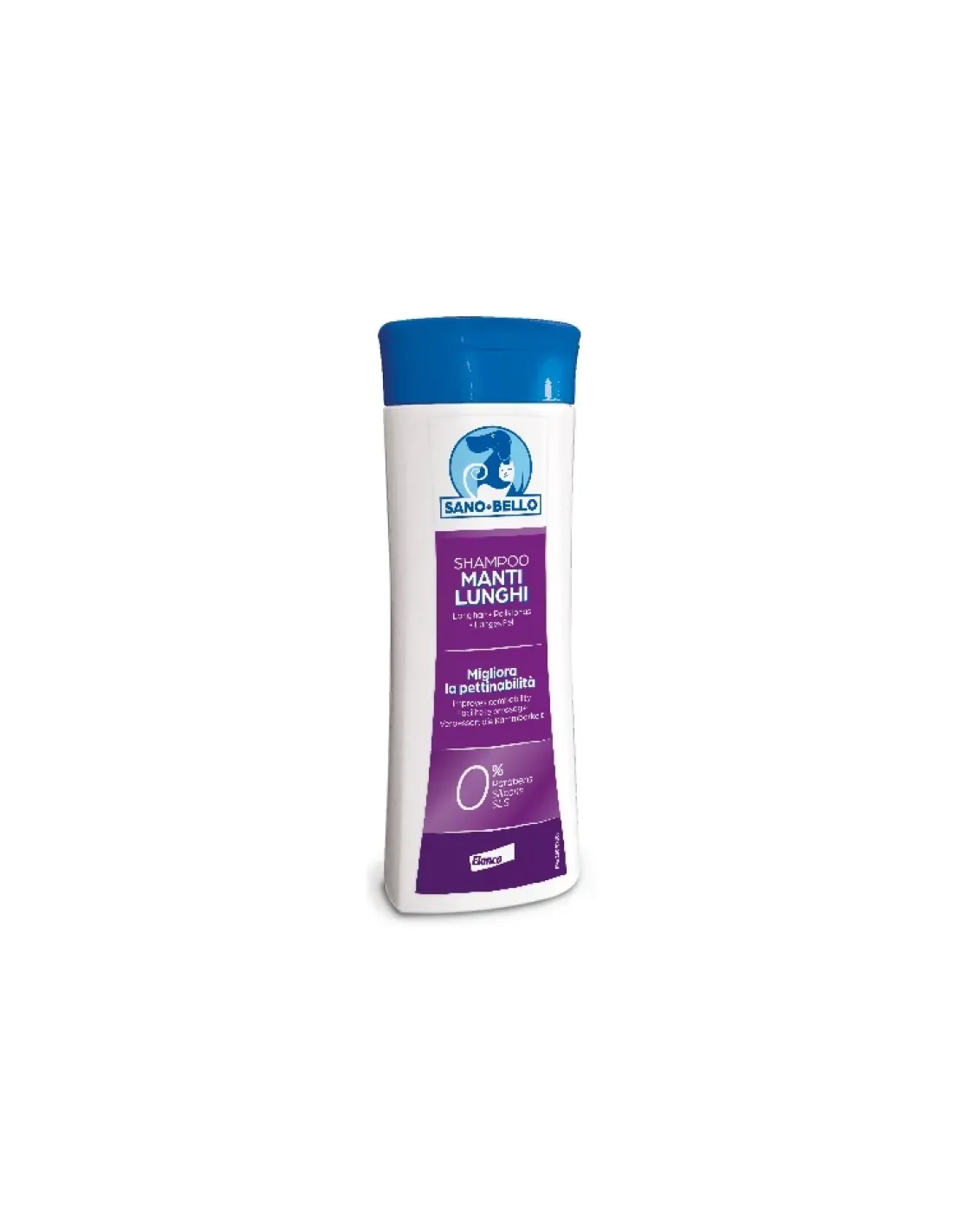
The Long Coat Shampoo has been specifically designed for bathing dogs with long coats. The shampoo has a delicate Talc scent and an Easy Comb Action which makes the coat docile to combing and promotes the elimination of knots. Suitable for frequent use, it leaves the dog's coat soft and shiny. Contains linseed oil and keratin. It rinses easily and respects the physiological pH of the dog's skin. Does not contain parabens, dyes and sodium lauryl sulphate (SLS).
The bathroom at home
Bathing your dog regularly is very important, especially when he gets very dirty! In fact, clean skin contributes to the well-being of your four-legged friend! With a little patience and the right tools it is possible to wash your dog at home without too much difficulty. At first your dog may not like bathing, but soon it can become a pleasant and interactive moment, especially if rewarded with cuddles and some tasty snacks.
Here are some useful tips to follow when bathing:
First of all, organize a dedicated space and collect all the useful tools:
- Specific shampoo for dogs
- Sponge
- One or more towels
- Non-slip mat (for washing in the tub or shower cubicle)
- Small container for liquids
- Hairdryer
- Brush, comb and cotton
... and don't forget at the end of the treatment a deodorant to perfume your dog and a snack to reward him!
Once you have the essentials with you, you can move on to the actual washing. Just follow some practical tips! Below is a step-by-step guide to your friend's bathroom.
- 1) Comb the dog before bathing to remove dirt, dead hair and loosen larger knots.
- 2) Place the dog in a tub or shower stall. To ensure the dog's balance and safety you can use a non-slip mat. In summer or when it is warmer you can wash your dog outdoors, in the courtyard or in the garden.
- 3) Use cotton balls to plug the dog's ears to avoid accidentally introducing water into the auricle.
- 4) Once you have placed the dog in the tub or shower, start bathing the dog only with warm water, starting from the paws, proceeding from the lower back to the shoulders, then moving on to the chest and finally the head, avoiding the eyes and ears.
This first phase is the most important and difficult and must be carried out with the utmost delicacy and sweetness but also with a certain firmness because the dog is often afraid of water and needs reassurance. It may also happen that the dog tries to escape and avoid treatment; it is therefore useful to avoid possible escapes.
- 5) Lather the dog with shampoo, dosing the amount based on size. The shampoo can be used by placing the product on the palm of the hand and then massaging the hair or by diluting the shampoo with water in a container; the hair massage must be carried out starting from the back to the head, until a soft foam is formed. Finally, soap the legs and tail.
- 6) Leave the shampoo to act for a few minutes.
- 7) Rinse well with plenty of warm water. If the dog is afraid of the bath, it is better not to use the water jet directly but to use a small container of water (e.g. plastic jug, plastic bottle) to remove the shampoo from the coat. It is very important to make sure you have completely eliminated the shampoo from your dog's fur.
- 8) Dry the dog immediately after the bath with a towel and hairdryer with non-hot air so as not to burn the dog's skin, which is much more sensitive to heat than human skin. The noise of the hairdryer can scare your friend but try to carry out the operation delicately. Comb the dog before the coat is completely dry.
- 9) Use a deodorant to prolong the scent of the bathroom.
- 10) Reward your friend with a snack and give him lots of cuddles to compensate him for his patience.
One last tip: in winter, as an alternative to bathing, you can also use a dry shampoo to clean your friend's fur without water.