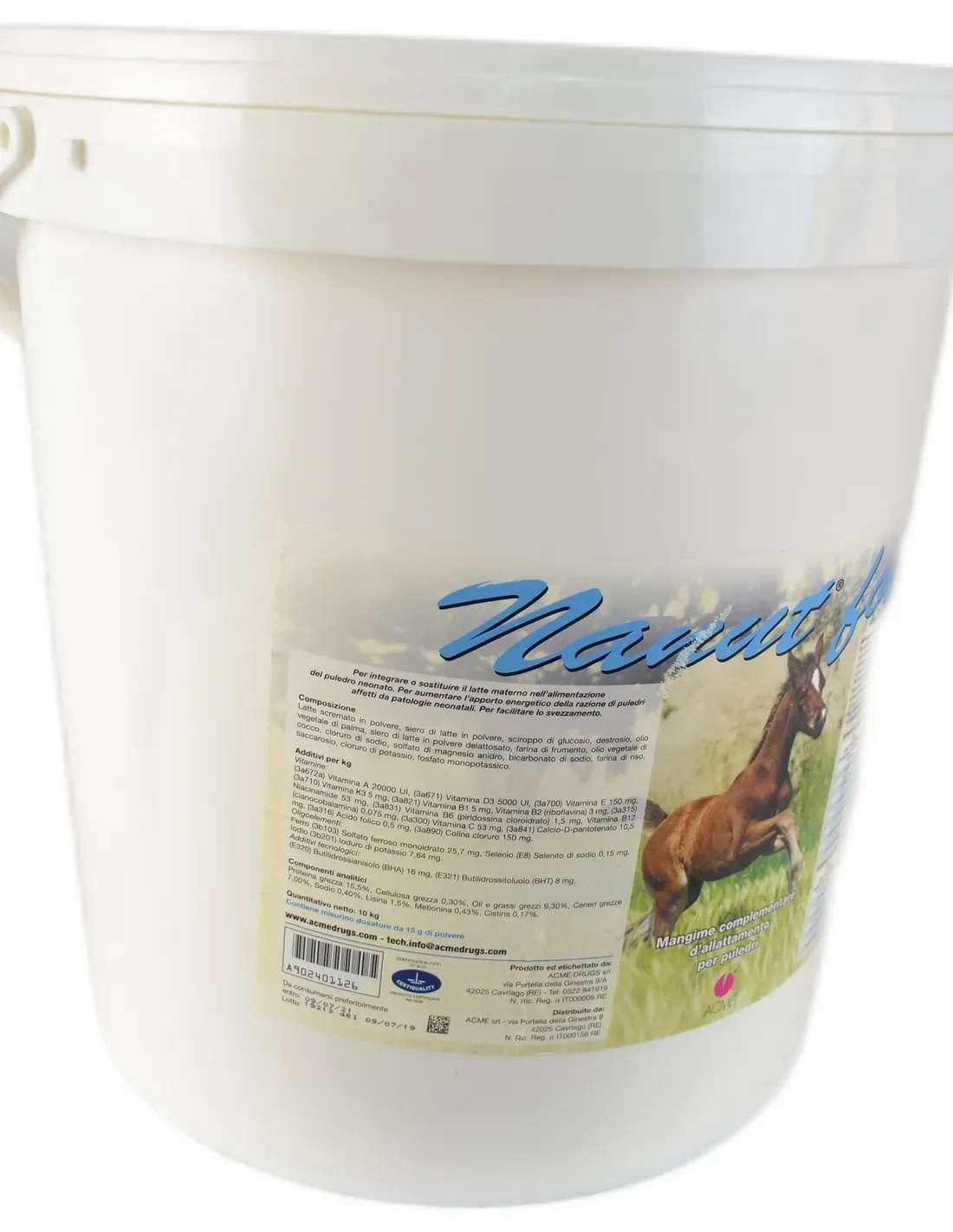
Therapeutic indications
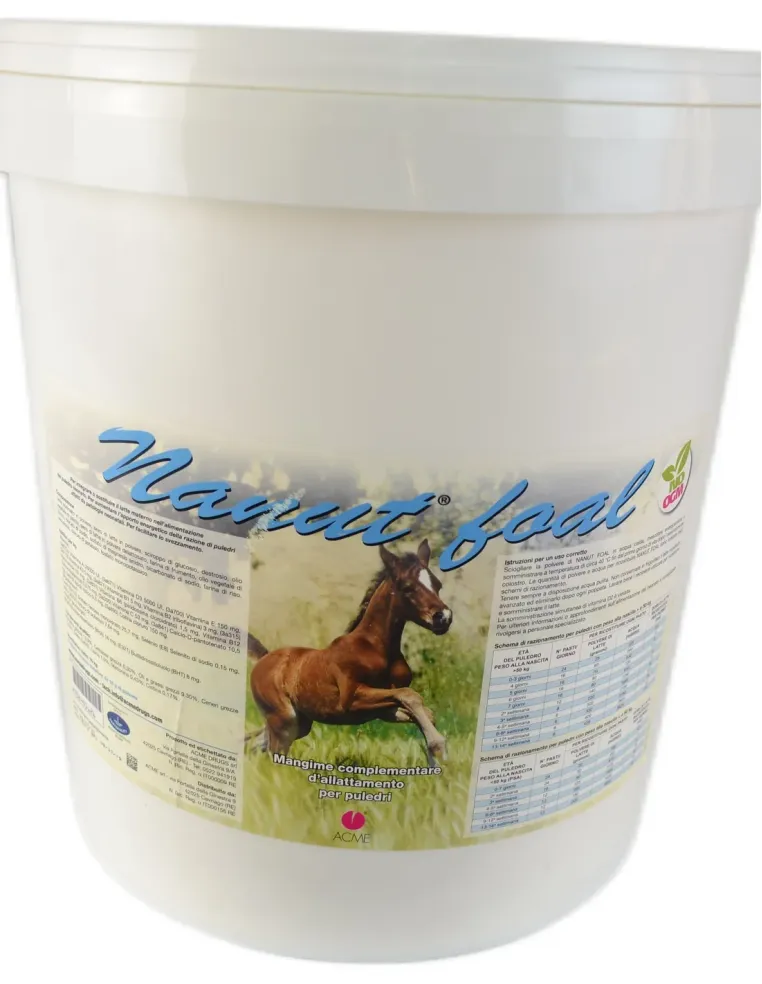
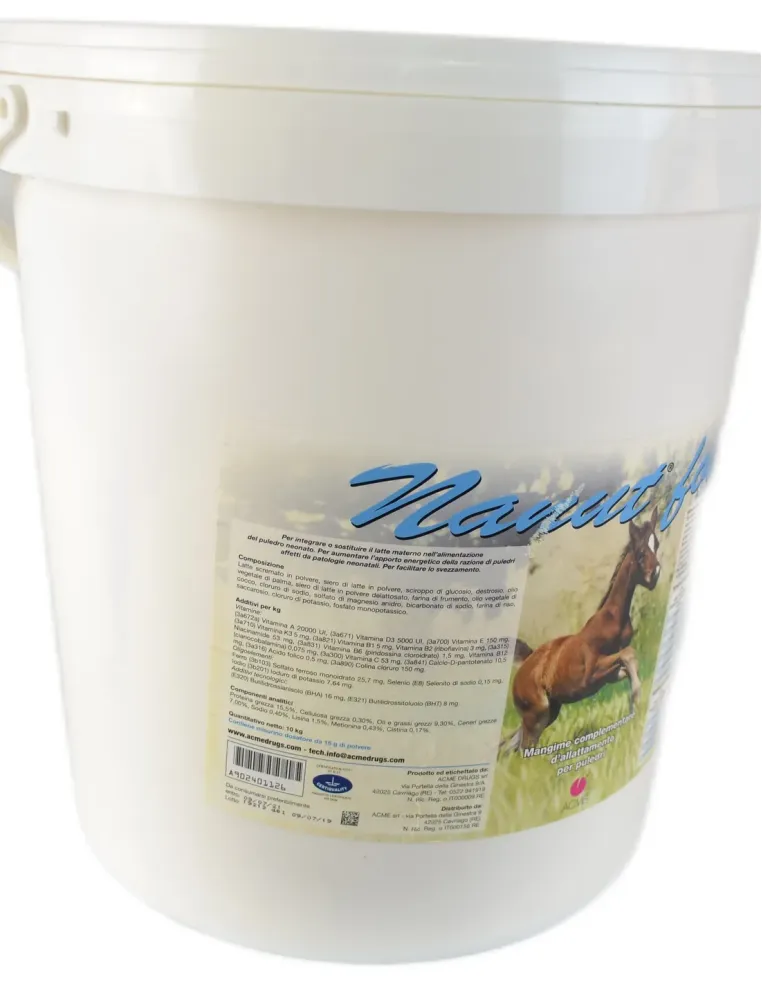
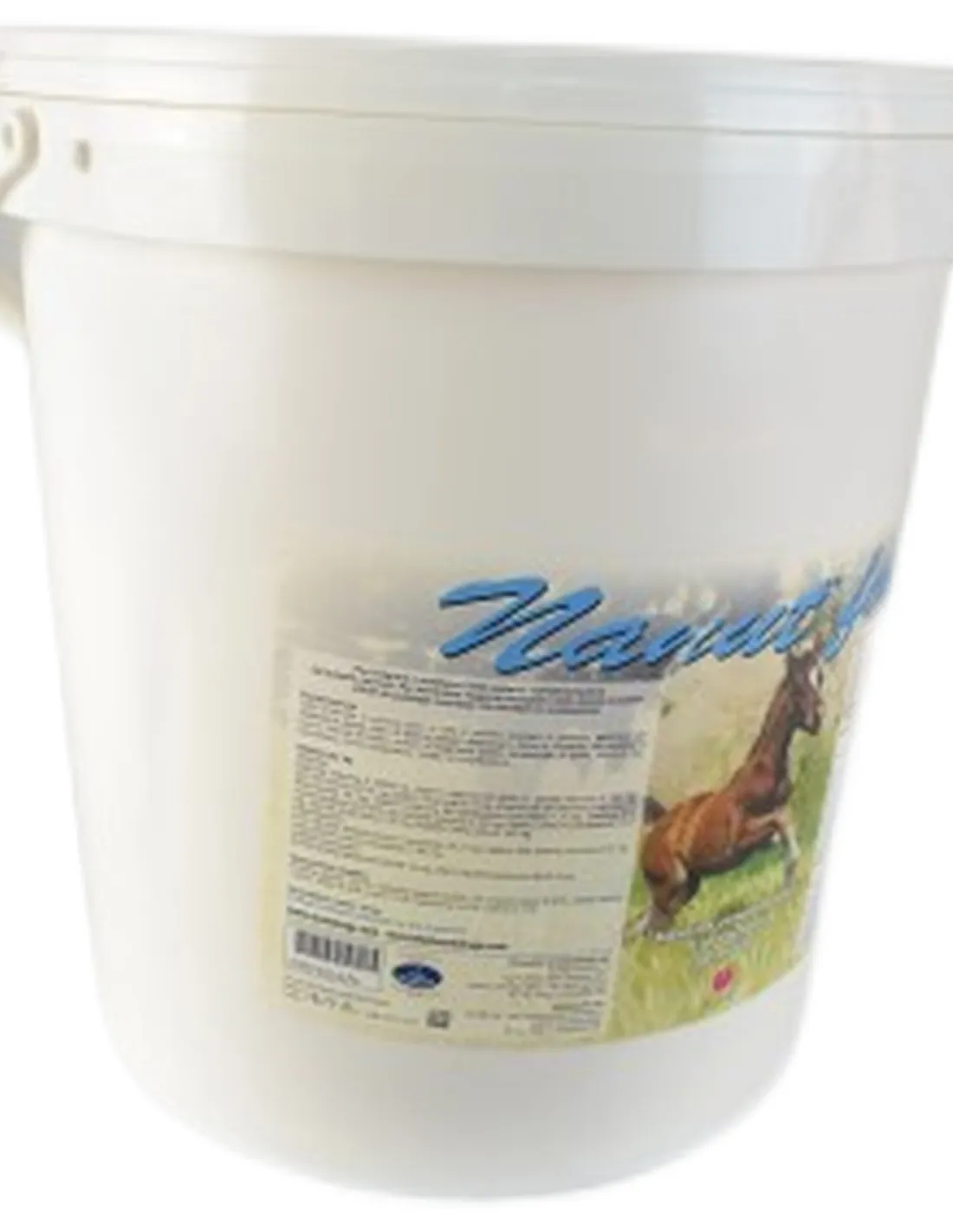
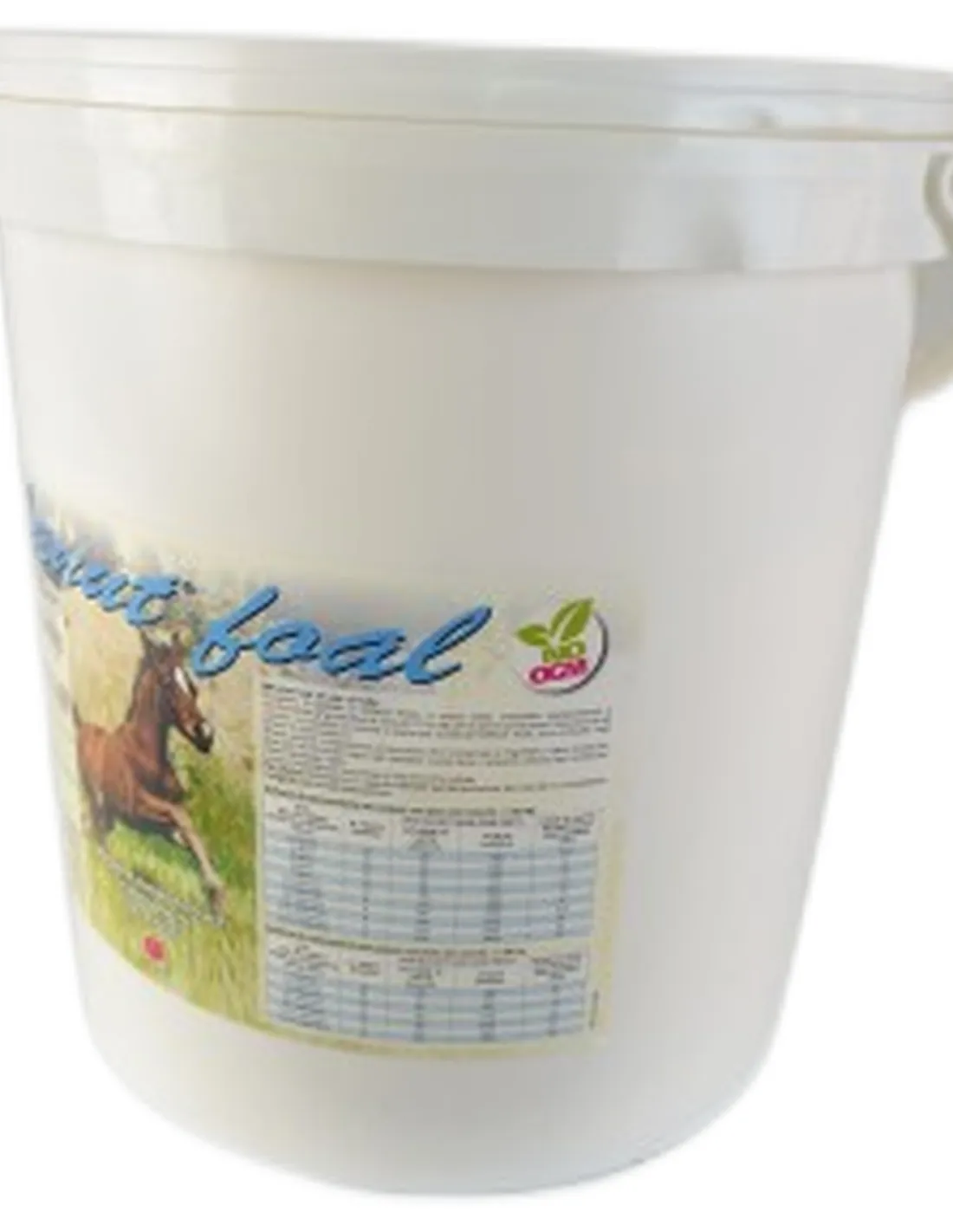
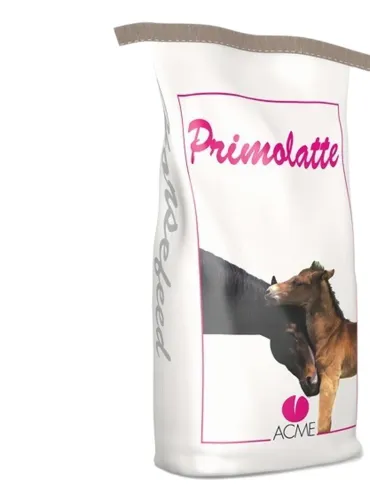
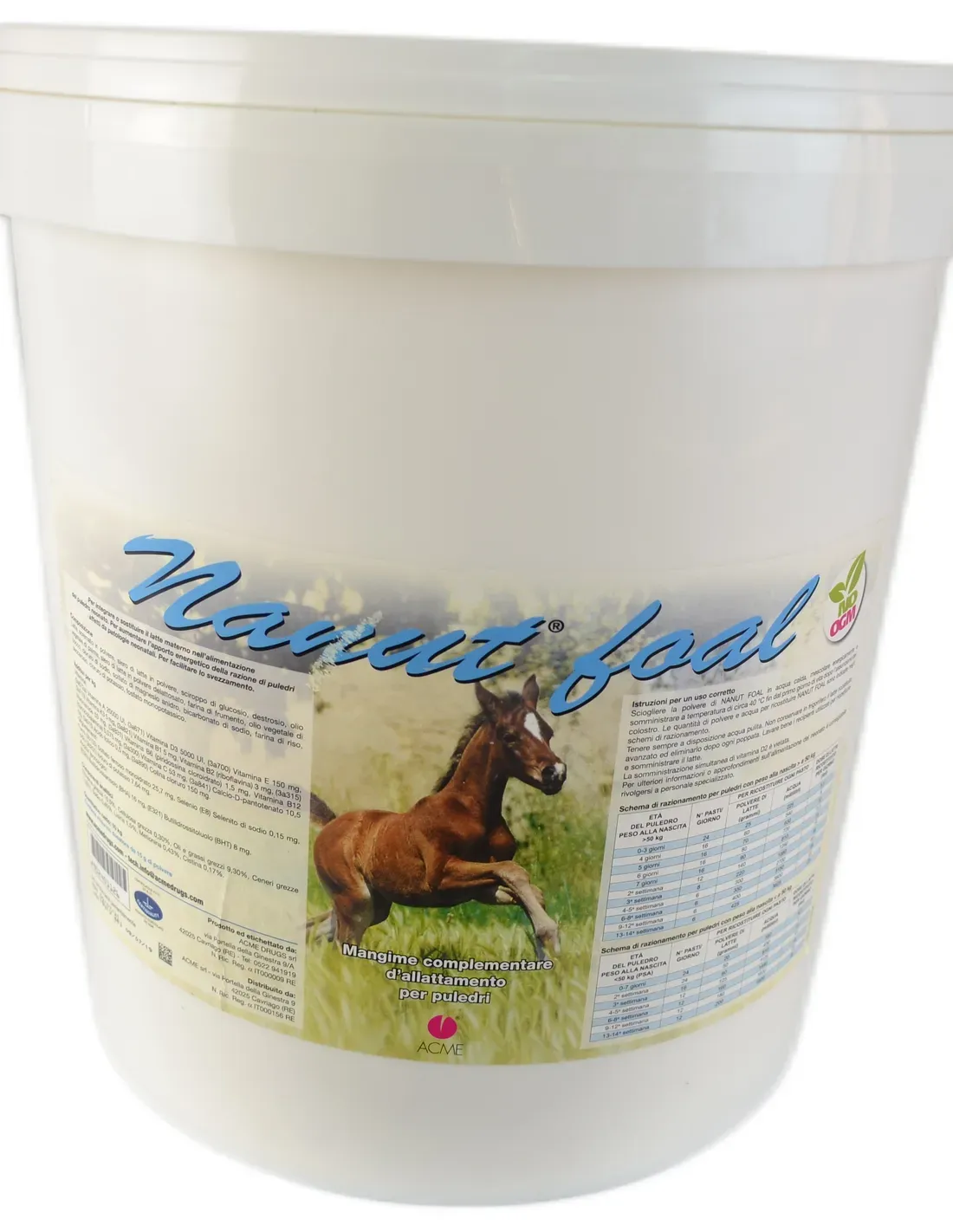
Formulated according to the most current dietary criteria: very high digestibility, moderate lactose and protein content to limit the risk of bacterial enteritis, high intake of essential amino acids to ensure correct growth, powerful emulsifiers to promote fat digestion, rehydrators to combat dehydration of the foal. To be used in cases of poor breast milk production, in orphaned foals and in cases of neonatal hemolytic anemia. To supplement or replace breast milk in the feeding of the newborn foal in case of: agalactia of the mare, unhealthy milk production, haemolytic jaundice from lactation. To increase the energy intake of the ration of sick foals. To facilitate weaning. Nanut can be administered in powder form mixed with the usual food to weaned foals and adult horses to improve their nutritional status. In this case, dose at a rate of 100-1000 g per day according to the weight and nutritional status of the subjects.
Dosage and administration
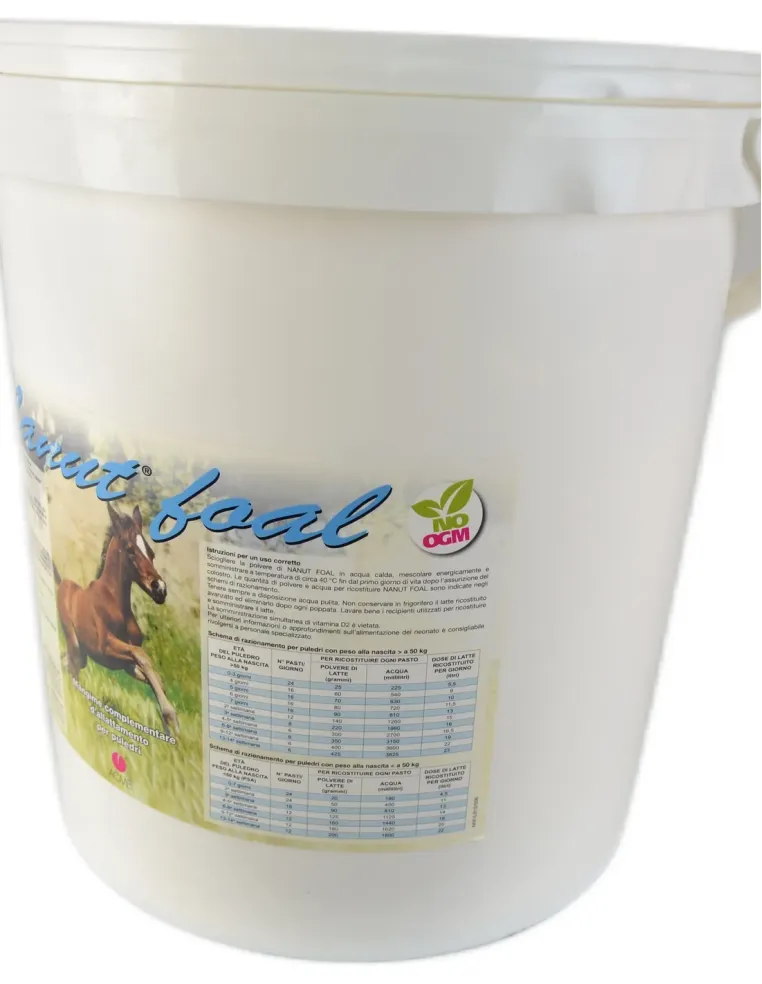
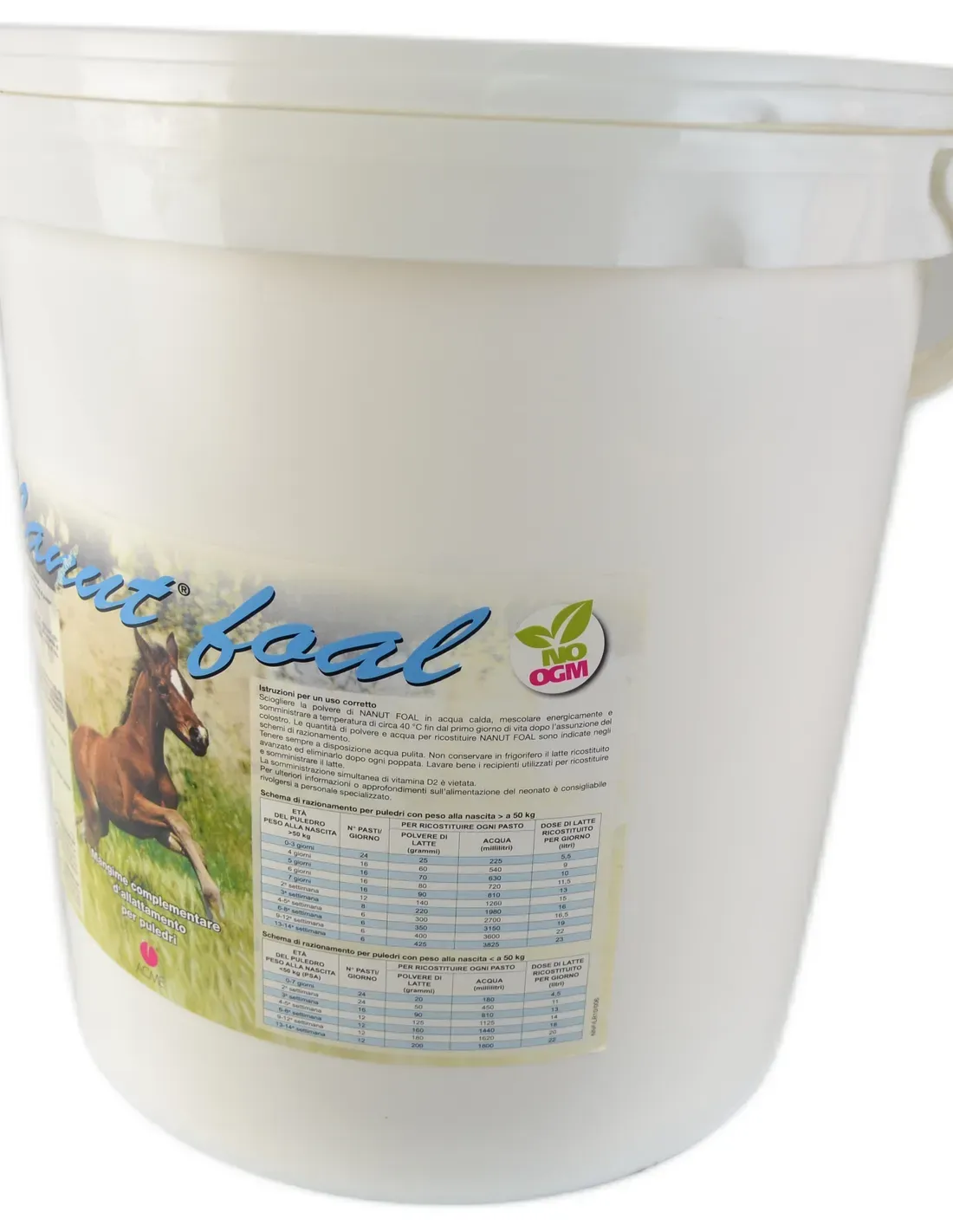
Dissolve 100 g of nanut powder for every 1.5 liters of hot water. Mix vigorously until you obtain a perfect solution to be administered warm from the first day of life after taking colostrum. In physiological conditions the newborn foal takes in milk equivalent to 20% of its weight. Sick foals can have energy needs increased by up to 100%, for example in cases of generalized sepsis, surgical interventions, thermal stress, diarrhea; in these situations it is essential to intervene with parenteral nutrition to support that based on nanut foal. The following average dosages refer to foals belonging to normal-sized breeds weighing 50 kg at birth and developing according to physiological growth in the absence of pathologies. Higher nutritional needs must be met by increasing the frequency of feedings rather than the amount of milk at each feeding. Foal age: 0-3 days; number of meals/day: 12; powdered milk/meal (g): 50; reconstituted milk/meal (ml): 450; reconstituted milk/day (litres): 5.4; foal age: 4 days; number of meals/day: 10; powdered milk/meal (g): 100; reconstituted milk/meal (ml): 900; reconstituted milk/day (litres): 9; foal age: 5 days; number of meals/day: 10; powdered milk/meal (g): 125; reconstituted milk/meal (ml): 1125; reconstituted milk/day (litres): 11.25; foal age: 6 days; number of meals/day: 10; powdered milk/meal (g): 130; reconstituted milk/meal (ml): 1170; reconstituted milk/day (litres): 11.7; foal age: 7 days; number of meals/day: 10; powdered milk/meal (g): 135; reconstituted milk/meal (ml): 1215; reconstituted milk/day (litres): 12.15; foal age: 2 weeks; number of meals/day: 9; powdered milk/meal (g): 180; reconstituted milk/meal (ml): 1620; reconstituted milk/day (litres): 14.6; foal age: 3 weeks; number of meals/day: 8; powdered milk/meal (g): 220; reconstituted milk/meal (ml): 1980; reconstituted milk/day (litres): 15.84; foal age: 4-5 weeks; number of meals/day: 6; powdered milk/meal (g): 300; reconstituted milk/meal (ml): 2700; reconstituted milk/day (litres): 16.2; foal age: 6-8 weeks; number of meals/day: 6; powdered milk/meal (g): 350; reconstituted milk/meal (ml): 3150; reconstituted milk/day (litres): 18.9; foal age: 9-12 weeks; number of meals/day: 6; powdered milk/meal (g): 400; reconstituted milk/meal (ml): 3600; reconstituted milk/day (litres): 21.6; foal age: 13-14 weeks; number of meals/day: 6; powdered milk/meal (g): 425; reconstituted milk/meal (ml): 3825; reconstituted milk/day (litres): 22.95. In the first day of life, nanut intake may vary depending on the possible intake of colostrum.
Target species
Equines