Shopping Cart
There are no more items in your cart


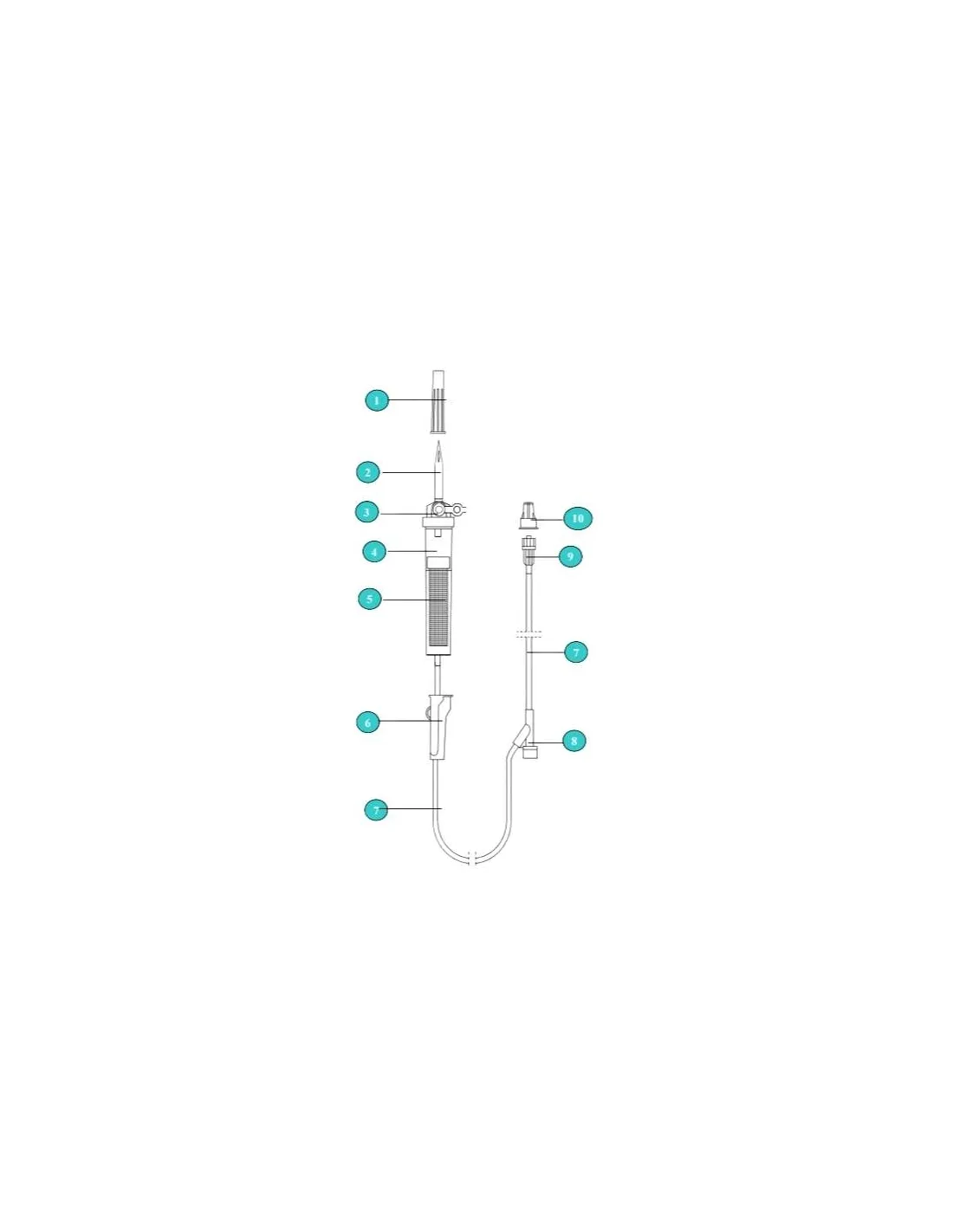
The 150cm Transfusion Set is a critical device designed specifically for the safe and effective transfer of blood and blood components to patients. With a length of 150 centimetres, this infusion set guarantees adequate distance between the transfusion bag and the patient, thus facilitating both hospital and home procedures. Made of high quality materials, the infusion set is designed to offer maximum transparency, allowing easy visual inspection of the passage of fluids. The high flexibility of the tube reduces the risk of kinks or obstructions which could compromise the regularity of the transfusion. It stands out for its compatibility with most bags and administration systems, thus allowing versatile use in acute or routine situations. The ergonomic design of the Luer connections ensures a stable and secure attachment, minimizing the possibility of leaks or contamination. The flow indicator and integrated clamp allow precise control of the infusion speed, adapting to the specific needs of each patient. The infusion set also stands out for its lightness and ease of use, making it practical during all phases of the transfusion. The integrated filtration system helps remove impurities and clots, ensuring a safe and effective transfusion.
Its length of 150 cm represents an ideal solution for environments where positioning flexibility is fundamental, allowing blood administration even in complex logistical situations. The set is packaged sterile, so as to ensure maximum protection from contamination before use. The uniform size of the internal lumen allows for a smooth and predictable flow, essential for both standard transfusions and emergency procedures. It is perfectly suited for use both in hospital departments such as hematology, surgery and emergency rooms, and during home therapies under professional supervision.
Thanks to its chemical and mechanical resistance characteristics, the infusion set maintains its integrity even after prolonged transfusion sessions. It is latex-free, thus reducing the risk of allergic reactions in sensitive patients. The device is disposable and must be disposed of according to current regulations for medical waste, limiting the risks of cross-infection to a minimum.
Therapeutic Indications
The 150 cm transfusion set is indicated for the administration of whole blood, blood components and intravenous solutions in patients requiring a transfusion. This device is particularly useful in clinical settings where there is a need to connect transfusion bags remotely from the venous access point, such as in intensive care, emergency surgery and transplantology departments. The length allows for safe flow even when the patient is in bed, on a stretcher, or during intra-hospital mobilization procedures. The infusion set is used both in emergency situations where the speed and safety of the transfusion are fundamental, and in planned long-term treatments for chronic patients, such as those undergoing regular transfusion therapies for haematological pathologies.
It is suitable for use on both adults and pediatric patients, thanks to the possibility of precisely monitoring and regulating the flow of blood or blood components administered via the graduated clamp on the tube. The main therapeutic indications include the management of chronic anemia, acute hemorrhages, coagulation deficits, complex surgical interventions and oncological treatments. It can also be used for transfusions of fresh plasma, platelet concentrates and red blood cells. The infusion set, thanks to the built-in filter, is recommended to increase the safety of the procedures by reducing the risk of administering unwanted fragments and aggregates.
The device is also recommended in all those contexts where rapid replacement of blood bags or blood components is required, thanks to the ease of insertion and removal of the system. The high compatibility with different types of needles and catheters allows transfusion administration even in patients with delicate or compromised vascular access. Furthermore, its transparency facilitates visual inspection for the prevention of gas embolisms and the prompt identification of any refluxes.
Composition
The 150 cm transfusion set is made with highly selected materials to guarantee biocompatibility, resistance and safety during the transfusion process. The hose is made of superior medical grade PVC, free of DEHP and latex, thus minimizing the risk of allergic reactions or toxicity for patients. The structure of the tube is designed to maintain a homogeneous and transparent internal lumen, allowing constant visual control of blood flow throughout the procedure. The universal Luer Lock connector ensures high compatibility with transfusion bags and standardized venous access devices, as well as guaranteeing a secure connection without the risk of accidental disconnection.
Inside the set there is a high-efficiency polyester filter (generally with porosity of 170-200 microns) aimed at retaining cellular aggregates and impurities present in blood products. The integrated flow regulator, often made of polyethylene or polypropylene, allows precise modulation of the infusion rate, adapting to the clinical needs and safety parameters of each patient. The sampling needle, where present, is made of siliconized stainless steel, so as to guarantee easy puncture of the bag and maintain the internal sterility of the set for the entire duration of use.
All the materials used are free of phthalates and harmful plasticizing agents, following the most recent guidelines in terms of health and environmental safety. Each component is packaged sterile through irradiation or ethylene oxide sterilization processes, to guarantee a protected product until the moment of use. The secondary packaging, usually in a polyethylene bag or medical paper, further protects the infusion set until it is opened.
Contraindications
The use of the 150 cm transfusion set is contraindicated in case of known or suspected hypersensitivity to any of the materials constituting the device, in particular medical PVC, polyester (present in the filter) or other polymeric components used to manufacture the set itself. It is not recommended to use the infusion set in the presence of incompatibility with the venous access devices used on the patient, or with transfusion bags that require specific connections not supported by the supplied Luer Lock system.
Do not use the infusion set if the packaging is damaged, non-sterile or expired, as the lack of sterility could expose the patient to serious infectious and septic risks. The use of the infusion set as a secondary transfusion device on already compromised circuits, in the presence of signs of visual contamination (mucoids, abnormal colors, residues in the tube), should be avoided. The reuse of the disposable infusion set, even after domestic or industrial sterilization processes, is strictly contraindicated, since the structure of the materials is not designed to maintain the safety and functionality characteristics beyond the first use.
In all clinical situations where an exceptionally slow outflow is required, with millimetric control of the volume delivered (e.g. low weight pediatric patients), the use of systems with microregulators or specific pediatric infusion sets is recommended, to further reduce the risk of accidental overdose. If you need to simultaneously transfuse multiple blood components or incompatible drugs intravenously, avoid using the same multiple infusion set.
Safety of the drug for the species
The use of 150 cm transfusion sets in human patients guarantees high safety standards, as each component of the device is designed to minimize the risks related to the transfusion procedure. The biocompatibility of the materials drastically reduces the chances of local or systemic adverse reactions. The absence of latex also safeguards patients with specific allergies, while single-use sterility eliminates the risks of cross-contamination and nosocomial infections.
The integrated filter contributes decisively to safety, effectively retaining cellular microaggregates, particles, and potential coagulated residues coming from the blood bag. The homogeneity of the internal lumen and the transparency of the device allow constant control of the blood path, reducing the incidence of events such as gas embolisms or the formation of air bubbles accidentally infused into the bloodstream.
All the constituent parts subjected to strict quality controls ensure the mechanical tightness of the circuit even in the presence of pressures slightly higher than physiological ones, avoiding leaks and accidental disconnection during infusion. It is important to follow the assembly instructions correctly and always use certified compatible connections; any forcing can alter the structural integrity of the product, varying the safety parameters during the procedure. The safety of the infusion set is also ensured by compliance with disposal protocols: the device must be disposed of in special containers for medical waste at the end of each transfusion, without proceeding to reuse.
Precautions
When using the 150 cm transfusion set, it is essential to adopt rigorous hygienic-sanitary precautions in order to guarantee the safety of the patient and healthcare personnel. It is necessary to wash your hands thoroughly and wear sterile gloves before handling the set, avoiding any accidental contact between the sterile parts of the set and non-sterile surfaces. Before use, it is essential to check the integrity of the package, verify sterility and the absence of obvious damage to the tube or fittings.
The infusion set must be connected following correct aseptic procedures, making sure to avoid air bubbles that could cause dangerous embolisms. Once the transfusion has started, visual control of the flow is recommended at regular intervals, monitoring for any blockages, leaks or changes in color of the blood. The regulator clamp must be used with caution to precisely modulate the infusion rate indicated by the doctor, preventing excessive or too slow flows.
After the procedure, the infusion set must be immediately disposed of in biohazard waste containers, avoiding any attempt at reuse. It is not recommended to bend the hose or pull it excessively so as not to compromise its functionality. In case of bleeding from the injection site or signs of local allergy, stop the transfusion immediately and report the event to the competent personnel. In the event of complications or malfunctions of the infusion set, the device must be replaced immediately.
Method of administration
Administration via a 150 cm transfusion set involves a series of steps to be carried out in strict compliance with asepsis standards. After ensuring the sterility of the package, the infusion set is removed with hands protected by sterile gloves. The piercing tip of the infusion set must be inserted firmly into the appropriate sampling point of the transfusion bag, taking care not to pierce areas not indicated to avoid leaks. We proceed to fill the tube by eliminating the residual air using the regulator clamp and the dripping chamber, making sure that there are no bubbles present.
Once venous access has been made on the patient, the infusion set is firmly connected to the administration route via the Luer Lock fitting, verifying the absence of disconnections and the tightness of the parts. The flow is regulated by acting on the precision clamp, following the parameters prescribed by the doctor; if necessary, the flow can be stopped completely by closing the clamp. The drip chamber allows a constant view of the transfusion rhythm and facilitates measurement of the volume infused.
At the end of the transfusion, the infusion set is disconnected from the patient following safe practices to avoid contamination. The infusion set must be immediately disposed of in suitable containers, without attempting to reuse it or keep it for subsequent procedures. Throughout the process, it is essential to carry out frequent checks to promptly identify any changes in flow, adverse reactions or complications attributable to the use of the device.
Treatment program
The use of the 150 cm transfusion set is part of treatment protocols that involve the intravenous administration of blood and blood components upon medical indication. Clinical protocols establish the frequency and quantity of transfusions based on the pathologies to be treated, the patient's haematological conditions and the therapeutic response observed. The infusion set, thanks to its ergonomic design and increased length, finds application both in acute treatments (for example in the case of massive hemorrhages) and in planned treatments for chronic patients suffering from anemia, thalassemia or coagulation deficits.
For repeated or particularly prolonged transfusions, it is recommended to use a new infusion set at each cycle, even within the same session, to reduce infectious risks and guarantee maximum performance. In children or patients with special needs, the rate and quantity of blood infused must be carefully adjusted through the regulating clamp and constant visual monitoring. Hospital guidelines may include specific indications on how to change the infusion set between one bag and another, to ensure continuity in therapy and minimize the risk of complications.
The protocols also take into account the possible interactions between the different infused blood components, suggesting, where it is necessary to use multiple bags consecutively, to replace the infusion set between one blood infusion and another. In emergency situations, the flexibility given by the length of the infusion set allows significant quantities of blood to be quickly infused even in environments where the movement of the patient or the bag is limited. Compliance with infusion times and timely management of the infusion system are crucial for the success of transfusion therapies.
Target species
The 150cm Transfusion Set is explicitly designed for use in human patients of all ages, including adults, the elderly and children. Its versatility makes it suitable for different clinical environments, such as hospitals, nursing homes, pediatric departments and day-hospital centers. Any uses on animal species must be carefully evaluated by the veterinarian and are not recommended unless expressly provided for by the regulations and the specific composition of the device.
The ergonomics of the product, the presence of filters and the compatibility with standard venous access systems make it an essential tool in human transfusion procedures, where safe and effective management of the distance between the blood source and the patient is necessary. The infusion set is also suitable for very delicate procedures such as transfusion in newborns or in patients with fragile venous access, thanks to the possibility of regulating the speed and volume of the infused substance with extreme precision.
However, the primary destination remains that of hospital and outpatient use in humans, in compliance with all regulations regarding medical devices and transfusion safety.